
2 July 1994 - USAir 1016
USAir Flight 1016 was a regularly scheduled flight between Columbia, South Carolina and Charlotte, North Carolina. On Saturday, July 2, 1994, the plane, a McDonnell Douglas DC-9 registered N954VJ, departed Columbia Metropolitan Airport at 18:15 EST for the 35 minute flight to Charlotte/Douglas International Airport. On board, there were 52 passengers (including two infants), 3 flight attendants, and two pilots. The flight was uneventful until the approach to Charlotte, where several heavy thunderstorms were in the vicinity of the airport. The flight was cleared by the tower to land on runway 18R. The plane, under control by the first officer, was approaching the runway in heavy rain conditions. The tower controller issued a windshear warning to all aircraft, but it was on a different radio frequency than Flight 1016.
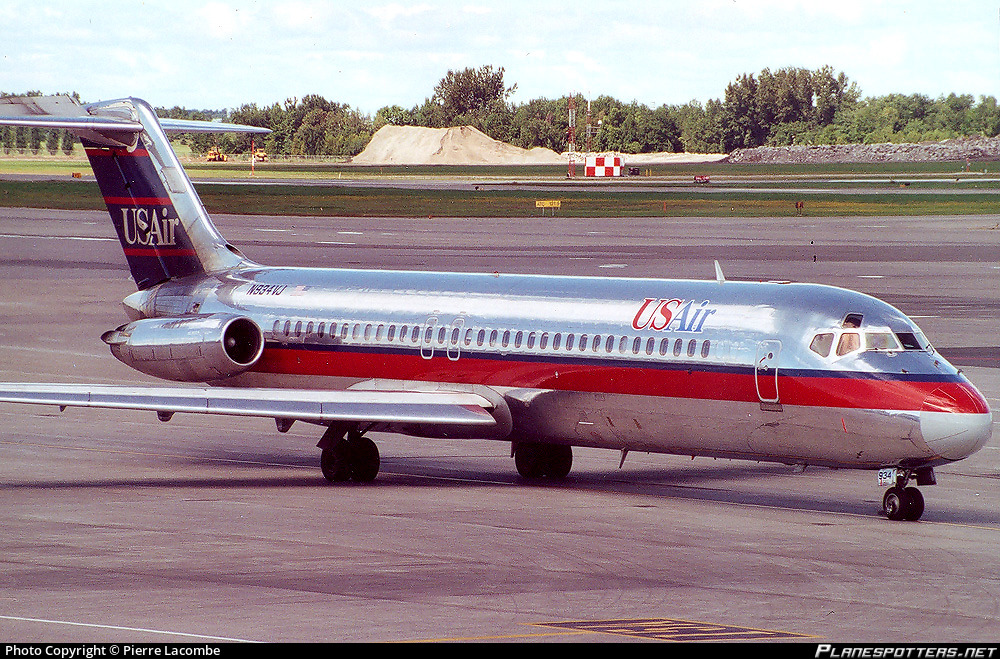
About a minute later, as flight 1016 was on final approach, the captain, realizing that they were in a serious predicament, instructed the first officer to 'Take it around, go to the right'. He then radioed the control tower and stated 'USAIR ten sixteen's on the go'. The plane struggled to climb due to the severe weather conditions, and immediately veered to the right and began to rapidly descend. The flight crew desperately tried to control the airplane as it plummeted toward the ground.
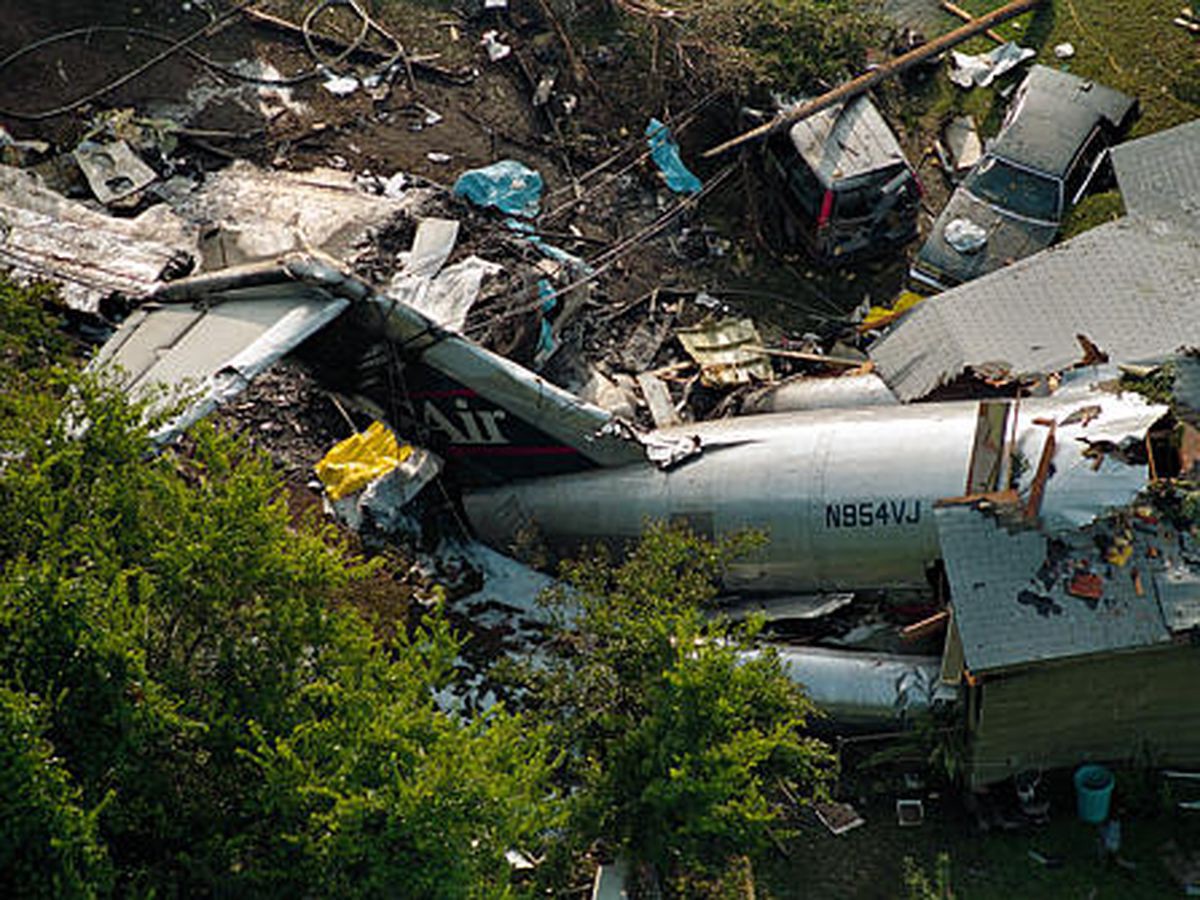
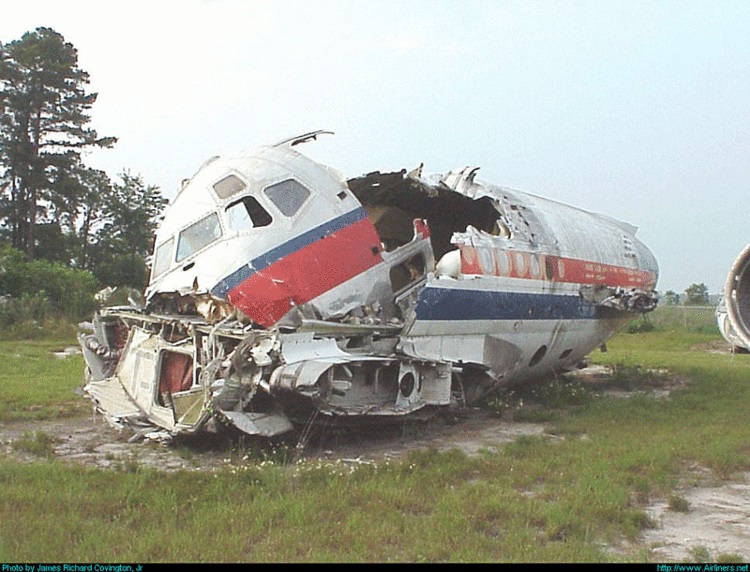
At 18:43 EST, the DC-9 touched down into a field within the airport boundary, about 1/2 mile from the threshold of runway 18R. It then crashed through the airport fence and impacted several trees, breaking apart while skidding down a residential street that was on the airport boundary. The plane broke into four major sections, the front 40 feet of the airplane, including the cockpit and the unoccupied first class passenger cabin, came to rest in the middle of Wallace Neel Road. The rear section of the fuselage, including the tail and the rear mounted engines, came to rest in the carport of a house.
The NTSB determined the probable cause to be the flight crew's decision to continue an approach into weather conducive to a microburst, the crew's failure to recognize a wind shear situation in a timely manner, its failure to establish and maintain the attitude and thrust necessary to escape the wind shear, and the lack of real-time adverse weather and wind shear hazard information dissemination from air traffic control.
Several aircraft on the ground delayed takeoff despite the PIREP of a smooth ride from the Fokker 100. When the tower issued the wind shear alert at 18:41:18, it was probably time to abandon the approach. The crew was focused on landing, but the weather was changing rapidly as the runway visual range dropped to 500 feet in heavy rain. It was determined later that there was a microburst one mile east of the approach end of 18R, with maximum winds of 50 knots. The net wind change was calculated at 86 knots during the DC-9's missed approach.
The flight crew's coordination could have been better, and the investigation concluded that the flight could have survived this wind shear encounter if several factors had been different:
- Maximum go-around power was not used. Approximately 2,000 more pounds of thrust were available. The first officer used the missed approach procedure instead of the wind shear recovery profile.
- Missed approach calls for max normal power, a maximum 15-degree nose-up attitude, flaps retracted to 15 degrees, and gear up. The wind shear profile mandates full throttle, 15 degrees nose up initially followed by two-degree increases as needed to stick shaker, and the aircraft is left in its current configuration (gear and flaps down in this case).
- The captain may have experienced vestibular illusion that gave him a false sense of the aircraft's being over-rotated to an abnormally steep pitch attitude. This is caused by the strong acceleration of the aircraft and must be overcome by reference to the flight instruments. The first officer, who was flying, was on the gauges and situationally focused. The captain was not, which led him to call for a reduction in pitch attitude.
- The tower was cited for not reporting observed lightning to the aircraft and for failure to mention the rapidly diminishing visibility in heavy rain and other multiple low-level wind shear alerts.
The crew's adherence to the wind shear escape procedure could have saved the day, but the margins would have been razor thin and dependent on doing it all exactly right. The best decision would have been to delay the landing. Thunderstorms mutate rapidly; and even with a recent PIREP, a minute or two can make a huge difference.
Transcript of the Cockpit Voice Recorder (CVR)
US1016: Radio transmission from the flight
CAPT: Captain cockpit communication
FO: First officer cockpit communication
APPR: Charlotte Approach Control
TWR: Charlotte Tower
18:36:59 APPR: "Tell you what, USAir 1016, may get some rain just south of the field. Might be a little bit just coming off the north. Just expect the ILS now. Amend your altitude...maintain 3,000."
18:39:02 CAPT: "If we have to bail out.... (unreadable)"
18:39:06 CAPT: "It looks like we bail out to the right."
18:39:09 FO: "Amen."
18:39:09 CAPT: "Ten miles to the VOR which is off the end of the runway. 'Bout a mile off the end of the runway."
18:39:14 FO: "Yeah."
18:39:16 CAPT: "So I think we'll be all right."
18:39:20 CAPT: "Chance of shear."
(The dialog in italics occurred on the tower frequency before USAir 1016 switched over at 18:39:30.)
18:39:12 US806 (on the ground, waiting to depart from Charlotte): "And 806, looks like we've gotten a storm right on top of the field here."
18:39:16 TWR: "USAir 806, affirmative."
18:39:20 US806: "We'll just delay for a while."
18:39:44 TWR: "...Charlotte Tower, Runway 18 Right, cleared to land. Following an F[okker] 100 (an airliner about the same size as a DC-9) on short final. Previous arrival reported a smooth ride all the way down final."
18:39:49 US1016: "USAir 1016, I'd appreciate a pirep from the guy in front of us."
18:40:10 FO: "Yep, laying right there this side of the airport, isn't it?"
18:40:14 CAPT: "Well."
18:40:15 FO: "The edge of the rain is, I'd say."
18:40:15 CAPT: "Yeah."
18:40:42 TWR: "USAir 1016, company FK 100 just exited the runway, sir; he said smooth ride."
18:40:48 TWR: "USAir 916, wind is showing 100 at 19."
18:40:56 FO: "One hundred at 19, eh?"
18:40:59 TWR: "USAir 1016, wind now 110 at 21."
18:41:05 CAPT: "Stay heads up."
18:41:06 TWR: "Wind shear alert, northeast boundary winds 190 at 13."
18:41:18 TWR: "Carolina 5211, Charlotte Tower, runway 18R, cleared to land, wind 100 at 20. Wind shear alert, northeast boundary wind 190 at 17."
18:41:32 TWR: "USAir 806, you want to just sit tight for a minute, sir?"
18:41:35 US806: "Yes, sir, we'd like to just sit tight."
18:41:37 TWR: "USAir 797, company aircraft in front of you is going to sit and wait a while, sir. Do you want to go in front of him?"
18:41:43 US797: "No, no, it wouldn't sound like a good plan. We'll, uh, it didn't look like a whole lot to us on the radar taxiing out, so it shouldn't be, uh, shouldn't be too many minutes."
18:41:54 CAPT: "Here comes the wipers."
18:41:56 FO: "All right."
18:41:57.6 (sound similar to rain concurrent with sound similar to windshield wipers starts. The sound continues until impact)
18:41:58.9 FO: "There's, ooh, 10 knots right there."
18:42:06.4 CAPT: "OK, you're plus 20."
18.42.14.0 CAPT: "Take it around; go to the right."
18:42:16.1 US1016: "USAir 1016's on the go (the DC-9's altitude is approximately 200 feet agl)."
18:42:17.7 CAPT: "Max power."
18:42:18.5 FO: "Yeah, max power.... "
18:42:18.5 TWR: "USAir 1016, understand you're on the go sir, fly runway heading. Climb and maintain 3,000."
18:42:19.4 FO: "Flaps to 15 [degrees]."
18:42:20.8 (clicks similar to flap handle being moved)
18:42:22.0 CAPT: "Down, push it down."
18:42:25.5 US1016: "Up to three, we're takin' a right turn here."
18:42:27.9 TWR: "USAir 1016, understand you're turning right? (US1016's altitude begins decreasing below 350 feet agl)."
18:42:28.4 ("Whoop whoop terrain" sound begins and continues to first sound of impact)
18:42:28.5 CAPT?: " – power."
18:42:32.7 (vibrating sound similar to aircraft stick shaker begins)
18:42:35.6 (sound of impact)

Search the database
